
The Cost of Waiting Another Season
If the garage got turned into a home gym, office, or workshop sometime in the last year or two and the door itself hasn't been touched since, you're not alone — and you're not necessarily wrong to be worried about it. Skip another season of hurricane-level humidity and afternoon storms without addressing it, and you're looking at a warped panel, a struggling opener, or a door that's letting in more weather than it's keeping out. None of those get cheaper by waiting.
The Argument You're Probably Having
One side of the house says the door is fine — it opens, it closes, it's never fallen on anyone. The other side says something feels off: it's noisier, the room never quite stays cool, there's a musty smell near the door, or the opener groans like it's working harder than it used to. Both of you are right. The door isn't broken in the way that makes it stop working. It's being asked to do a job it wasn't built for, and in this climate, that shows up slowly instead of all at once.
What Actually Changes When a Garage Becomes a Room
A garage door is engineered for one job: open and close, handle wind load, keep rain out. Once the space behind it becomes a gym, office, or shop, the door is suddenly part of a conditioned, lived-in room — and a few things shift that most homeowners don't expect:
- Humidity gets trapped instead of ventilated. A garage used for storage breathes a little through gaps and use. A finished room runs an AC unit or fan, and the temperature swing between the cool inside and the hot, humid air pressing on the door from outside causes condensation on the metal — which is exactly how rust and swelling get started along the bottom seal and panel seams.
- The opener may be under more strain. If anyone added insulation panels to the door to help with temperature control, that's extra weight the opener and springs weren't necessarily sized for. An opener that's straining shows up as slower movement, more noise, or the door reversing unexpectedly.
- Wind-load rating doesn't go away. This part surprises people: even if the garage is now a den or a studio, the door is still the structure's weak point in a storm. A door that was correctly rated for wind load when installed doesn't automatically stay that way if panels have been modified, tracks have shifted, or hardware has corroded. Local wind-load expectations apply to the door regardless of what's happening behind it.
- Safety sensors get buried. Gym equipment, workbenches, and storage bins have a way of migrating toward the door. If the photo-eye sensors near the floor get blocked by a bike, a weight rack, or a toolbox, the door may refuse to close — or worse, not reverse properly when it should.
Signs the Door Is Already Telling On You
You don't need a professional eye to catch most of these early:
- The room near the door feels noticeably warmer or more humid than the rest of the house, even with the AC running.
- A musty or metallic smell near the bottom seal after a rainy stretch.
- Visible condensation beading on the inside of the door panels in the morning.
- The opener making a new grinding or straining sound, especially on the way up.
- Daylight visible around the edges of the door when it's closed.
- Rust spots starting along the bottom panel or hardware, especially if the property is closer to the coast and gets salt air.
What to Actually Do About It
There's no single fix — it depends on how the space is being used and how much was already done to it.
- If insulation was added to the door itself: have the spring tension and opener force checked. Added weight without adjusting the counterbalance is a common reason doors start closing unevenly or opener gears wear out early.
- If moisture and rust are showing up: the weatherstripping and bottom seal need to be in good shape, not just present. A worn seal lets humid air and wind-driven rain in during storms, which is the fastest path to the rust-and-swelling cycle this climate is famous for.
- If the room is used daily (gym, office, shop): a tune-up on a regular schedule matters more than it did when the space was just for parking. Hardware that would've lasted years in an unconditioned garage wears faster when it's cycling through temperature and humidity swings tied to a lived-in room.
- If the door was never reassessed for wind load after modifications: that's worth confirming before the next storm season, not during one.
When to Call Laurel Garage Door Pro
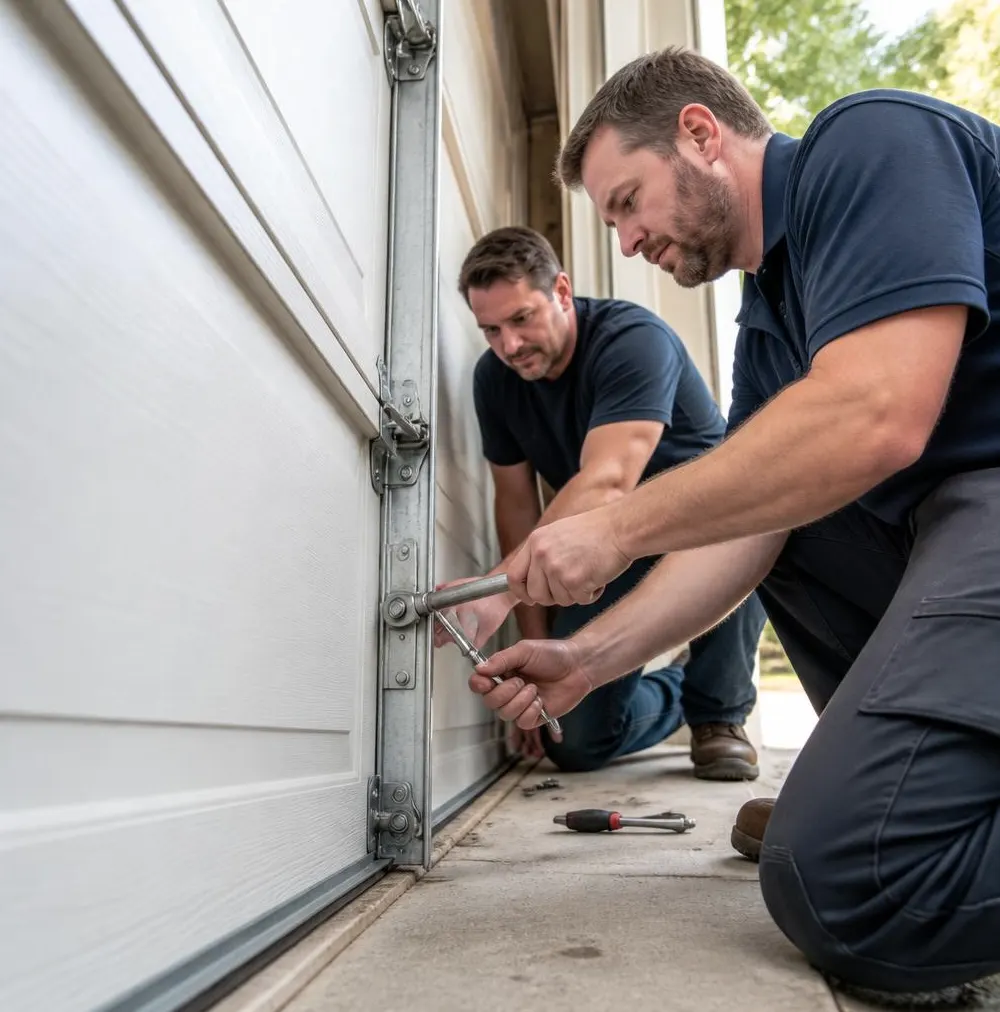
If there's visible rust, condensation inside the panels, or an opener that sounds like it's working too hard, a Garage Door Tune-Up & Maintenance visit will catch most of this before it becomes a bigger repair. If the door was insulated or modified when the room was converted and nobody rechecked the spring tension, that's a Garage Door Spring Repair conversation — an unbalanced door under added weight is a safety issue, not just an annoyance.
If your converted garage in Laurel, FL or anywhere nearby is giving you one of these warning signs, call Laurel Garage Door Pro. We'll look at the whole picture — door, opener, seals, and hardware — and tell you straight what needs attention now versus what can wait.