
The short answer
If your garage door starts closing and then reverses back up, or refuses to close no matter how many times you press the button, the problem is almost never a mystery. In the vast majority of cases it's the safety sensors near the bottom of the tracks, something blocking their line of sight, or the opener's force settings reacting to resistance in the door itself. A full system failure is possible, but it's the least likely explanation, not the first one.
What this actually looks like
A few common patterns show up in Laurel-area homes, often tied to our humid, storm-prone climate:
- The door closes a few inches, stops, and goes back up every single time, no matter what.
- The door won't move at all when you try to close it, but opens fine.
- The opener light blinks a specific number of times when you try to close, which is the opener trying to tell you something.
- It closes fine in the morning but not in the afternoon, which often points to sun glare or moisture on the sensors after a storm.
Where a technician starts looking
1. The photo-eye safety sensors
These are the two small boxes mounted a few inches off the ground on either side of the door, connected by an invisible beam. If anything breaks that beam, or if the sensors aren't pointed at each other precisely, the opener assumes someone or something is in the way and reverses the door as a safety feature. This is checked first because it's the most common cause and the cheapest to fix.
In this part of Florida, afternoon downpours are the usual culprit. Humidity and condensation can fog the lenses, rain can leave water droplets that scatter the beam, and low winter sun angles can wash out the sensor's ability to read the signal. A quick wipe-down of both lenses and a check that neither bracket has been bumped or loosened is often all it takes. If the sensors have corroded wiring from salt air exposure near the coast, the connection itself may need to be redone rather than just cleaned.
2. Something physically blocking the beam or the track
Leaves, storm debris, a stray garden tool, or even cobwebs across the sensor eyes can trigger a reversal. Walk the full width of the door opening and check both sensor lines of sight at floor level. This takes two minutes and solves the problem more often than people expect, especially right after a windy afternoon.
3. Opener force and limit settings
Every opener has settings that tell it how far to travel and how much resistance to tolerate before it assumes it's hit an obstruction. If these are set too sensitive, a door that's slightly heavier than usual, due to humidity-swollen panels or a bit of rust in the hinges, can trigger a false reversal even with clear sensors. A technician will test and adjust these settings carefully, since setting them too loose defeats the safety feature they're meant to provide.
4. Track alignment and rollers
If the door is catching or binding partway down, the opener may read that resistance as an obstruction and reverse. Tracks can shift slightly over time, especially in homes where humidity causes repeated expansion and contraction of the door material, and rollers can wear out or rust from salt-laden coastal air. A bent track or a roller that's jumped its channel usually shows visible wear or a slight gap where the door and track no longer line up cleanly.
5. Springs losing tension
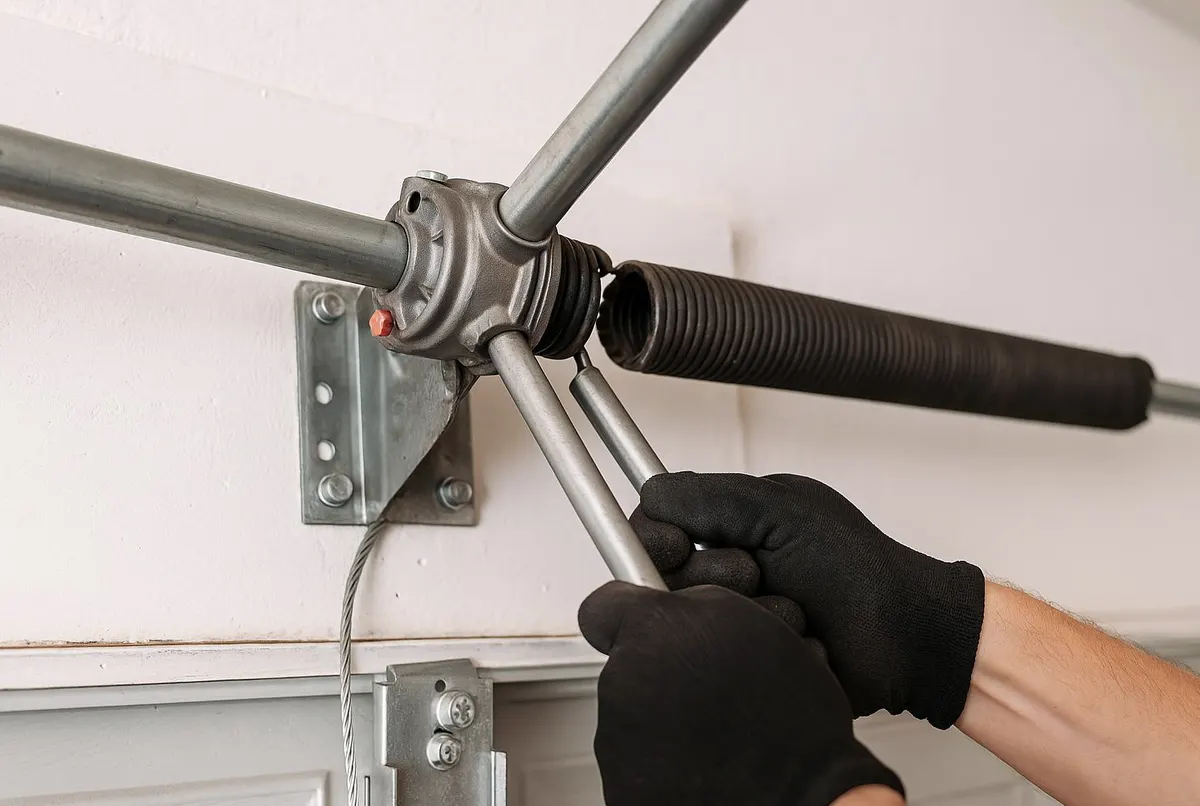
If the door feels unusually heavy when operated manually, or the opener strains and groans before reversing, worn-out springs may be putting more load on the system than the opener is designed to handle. Over time this looks like a reversal problem, but it's really a tension problem. Springs are under extreme tension and are not a safe do-it-yourself fix; they need to be replaced with correctly matched springs for the door's weight and size.
6. The opener's logic board or wiring
If sensors are clean and aligned, nothing is blocking the beam, and the door moves smoothly by hand, the issue may be electrical. Power surges during storm season can damage an opener's circuit board, and the door may behave erratically as a result, closing partway, stopping randomly, or not responding to the remote at all. This is the least common cause but the one most likely to require full opener replacement rather than a simple adjustment.
When to call Laurel Garage Door Pro
If you've wiped down the sensors, cleared the track, and the door still won't close or keeps reversing, it's time to get a trained eye on it rather than keep testing the remote. Our technicians start with the same checklist above, but with the tools to measure actual force settings, inspect wiring for coastal corrosion, and tell the difference between a sensor problem and a spring problem before touching anything under tension. If the opener itself has failed, we handle Garage Door Opener Installation with units suited to Florida's humidity and storm conditions. If the door is binding or catching on worn hardware, our Off Track Door Repair service resets alignment and replaces worn rollers so the opener isn't fighting the door every time it closes.
If your garage door in Laurel, FL is reversing, stalling, or refusing to close, call Laurel Garage Door Pro for a fast diagnosis and a repair done right the first time.